Jerusalem Center for Women
- Donate
- Join Volunteer
- 9159449499
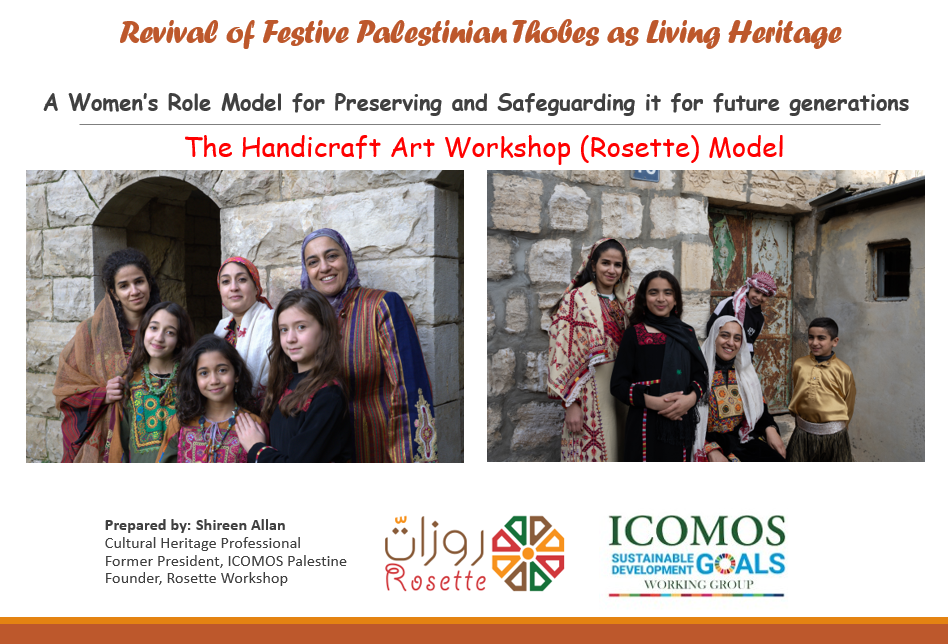
Rosette Workshop is a model for safeguarding Palestinian intangible heritage through the revival of festive Palestinian thobes. The Rosette Workshop initiative highlights women’s knowledge, intergenerational craft transmission, and embroidery as a living cultural archive of identity and memory.
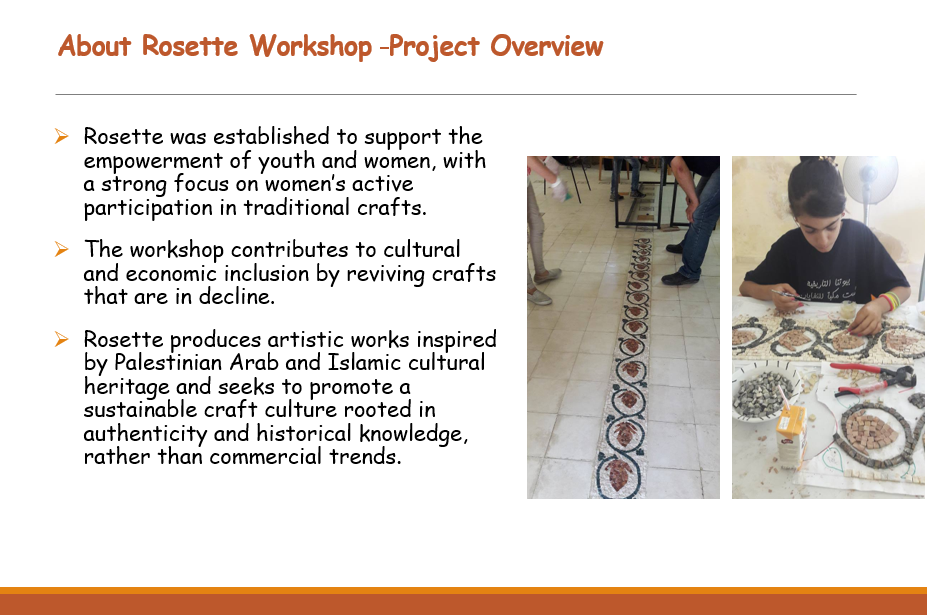
Rosette was established to support women and youth through heritage-based crafts, linking cultural preservation with economic empowerment. The workshop focuses on reviving endangered techniques while providing apprenticeship-based training in embroidery, mosaic, and Arabic calligraphy.
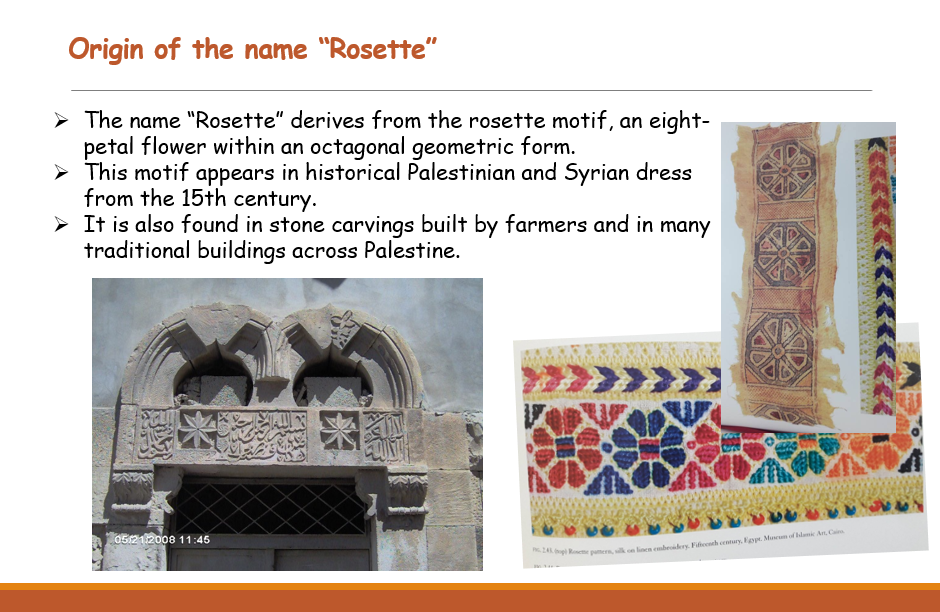
The name “Rosette” refers to an eight-petal floral motif embedded in an octagonal geometric form, widely found in historical Palestinian and Syrian dress since the 15th century, as well as in traditional architecture. It reflects continuity between visual culture, craft, and place.
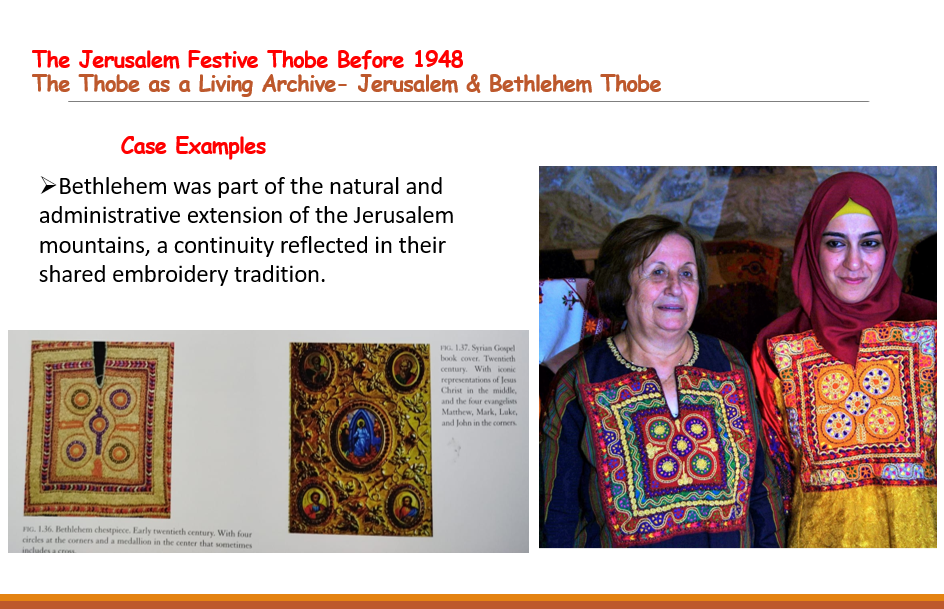
The Palestinian thobe was presented as a form of living heritage, a garment that preserves geography, identity, and historical continuity. Similarities between regional thobes, such as those of Jerusalem and Bethlehem, reflect shared environmental and cultural contexts that existed prior to colonial divisions. Embroidery patterns also connect to broader artistic traditions, including motifs found in historical mosaics and architecture.
The presentation also addressed how historical disruptions, particularly the 1948 Nakba and subsequent occupation reshaped textile production and daily life. Despite this, women preserved their embroidered thobes as personal archives of memory. In times of colonial restriction, embroidery became a form of resistance, as seen during the First Intifada when women stitched national symbols into garments.
Rosette continues this legacy by training a new generation of artisans and documenting endangered techniques such as Tahrira and Qasab (Couching embroidery). Through direct learning from elder artisans, the project ensures continuity of knowledge while reactivating the thobe as a contemporary cultural practice.
Ultimately, the workshop positions craft not only as heritage, but as a dynamic system that connects identity, community, and resilience. Today, the thobe continues to evolve, appearing in both traditional and contemporary forms, and remaining present in everyday life as a symbol of cultural continuity.
For more information, please visit:
Facebook
insta
website (under construction)